TOPICS THAT HAVE EMERGED
Institutions, preservation organizations, designers, builders, and investors discuss the conditions that make adaptive reuse a concrete driver of urban regeneration.
Clear Rules and Predictable ProcessesNot fewer rules, but more understandable ones. Capital accepts business risk, not procedural uncertainty: hence the proposal for a single process for reuse in the public interest, with discussions among government agencies, stakeholders, and operators moved to the beginning.
First the features, then the propertyNeed comes before the building, function before the design, and vision before funding. Guides for local governments, City Plans, and the measurement of the cost of underutilization help restore public value to existing assets.
The Quality of the ProjectUpgrading a building’s “hardware” isn’t enough: we also need the “software”—the ability to open them up to the city and accommodate new uses. Quality is measured by how much a project improves public life, and this can become an incentive recognized by regulations.
Protection, Access, and Urban LifeA closed-off place fades from the collective memory: reuse is, first and foremost, a matter of access. We must restore monuments that are alive—not merely those that have survived—and measure regeneration by how much life is restored to the city.
Download the proceedings (PDF) ↓
Read the article ›
Francesca Fradelloni's account of the conference in *The Brief*
THE PROGRAM HOW IT UNFOLDED
10:30
Reception and Registration of Participants
11:00 a.m.
Official Greetings
Giorgio Mulè, Vice President of the Chamber of Deputies (video message)
Gilberto Pichetto Fratin, Minister of the Environment and Energy Security (video message)
Lucia Albano, Undersecretary of State at the Ministry of Economy and Finance
Giampiero Cannella, Undersecretary of State at the Ministry of Culture (video message)
Massimo Milani, Chamber of Deputies
11:30
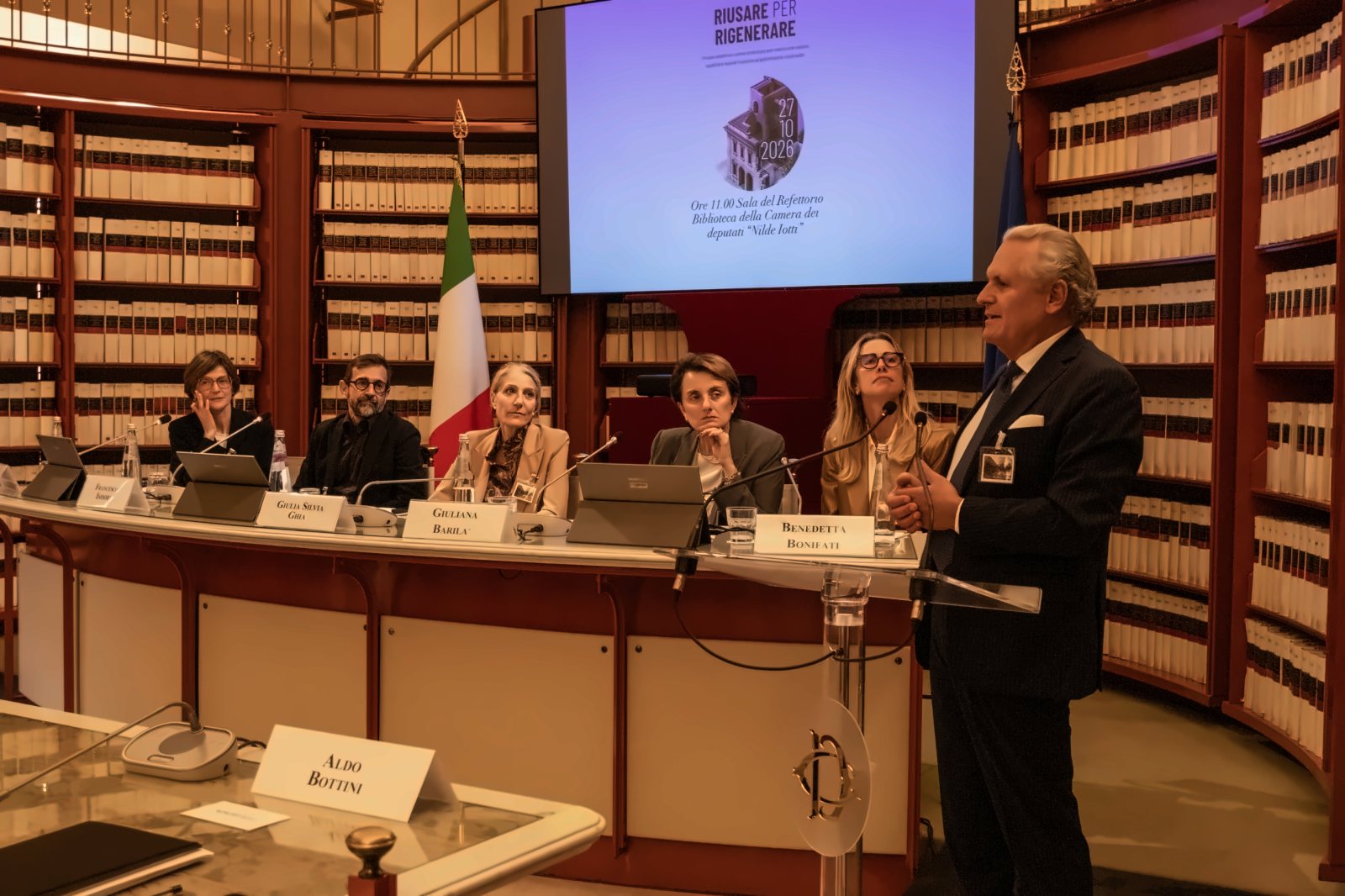
Opening of the Technical Session — Aldo Bottini, CEO of Prospettiva
11:40
First Roundtable Discussion
12:15
Second Roundtable Discussion
12:45
Conclusions — Aldo Bottini